I struggled to write this newsletter.
The past two weeks have been busy with work, and I’m also in the middle of planning a wedding with my fiancé, so our weekends are fuller than they used to be. I’m grateful for it all, and yet when I sat down to write, I felt restless. I changed the topic three times and wasn’t sure I’d finish.
Therefore, the theme I ended up choosing is acceptance.
I chose this theme because whenever we step outside our comfort zone, discomfort is part of the deal. Our nervous systems are wired to respond in familiar ways, and change is scary for most of us, myself included.
A big reason I started Sweet Spot Sustainability is because I was tired of the “hustle culture” that’s so prevalent right now. The one that tells us to always be improving, optimizing, and perfecting our lives. It’s closely tied to overconsumption and overworking, and often driven by the belief that you need to do more because you’re not enough as you are.
We hear a similar message in sustainability, that we always need to do more for the planet. But most people I meet in the green building space already have a lot on their plate.
I think it’s important to remember that we’re doing our best, while still striving to do better.
INNER SUSTAINABILITY INSIGHT
When it comes to supporting our wellbeing, it’s easy to fall into the “not enough” trap.
As a recovering perfectionist, self-improvement used to feel like a form of self-flagellation, beating myself up whenever I didn’t meet impossibly high standards.
But when we’re navigating challenging times, self-acceptance is key, especially when it comes to supporting our nervous system.
Next time your stress response kicks in, remember to be kind to yourself by embracing both/and:
🟥 Fight (push through)
I often do my best work under pressure, and I can also allow myself to take breaks along the way. Rest and refuelling help me do my best work.🟨 Flight (avoidance)
It’s normal to want to avoid a task when it’s new, or when I’ve had a difficult experience before. And I am capable of learning new things and trying again.🟦 Freeze (pause)
It’s okay to pause before diving in, and I can take small, manageable steps to get started. I don’t have to finish everything at once or do it alone.🟩 Fawn (people-pleasing)
It’s okay that I find it hard to say no because helping people matters to me. And I can set guardrails around my “yes”, or redirect requests so I can maintain focus.
OUTER SUSTAINABILITY INSIGHT
Acceptance also means accepting where your clients and coworkers are at.
As green building professionals, we naturally want our clients to do better. But often, they hear “sustainability” and immediately assume it will cost too much or delay the construction schedule.
The same thing can happen with coworkers, especially in firms where sustainability isn’t the core focus. You might hear: “It’s too difficult.” “It takes too much time.” “Clients never ask for that.”
Next time you meet resistance on a project, try this approach:
Accept “I hear you. We don’t want to impact cost or schedule, and you’ve got a lot on your plate.”
Dig deeper What’s driving the resistance? A past experience, or uncertainty about how this works?
Validate “That makes sense given what happened before.”
“This is a complex topic, I get why this feels like a lot.”
Offer a baby step
“Would you be open to looking at the GWP of standard concrete mixes, not the premium ones?”
“If a deep dive feels like too much, I could share a short overview at our next technical session.”
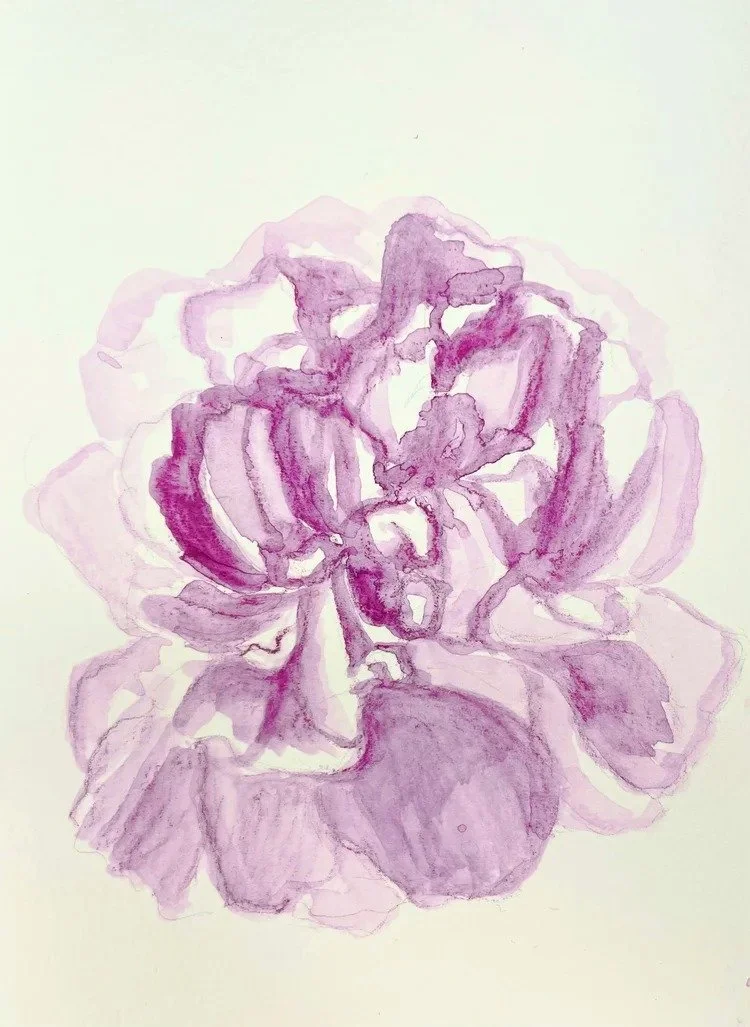
ART I’M MAKING
Watercolour has been an unexpected teacher in self-acceptance.
When I first started, I struggled with how little control I had. I would put pigment down and watch it flow in directions I didn’t intend. This floral was one of my earliest pieces, and I remember how much frustration I felt with every brushstroke.
Over time, I learned to stop fighting the watercolour and instead follow where it wanted to go.
That shift changed everything.