I spend a lot of time thinking about something that affects all of us, yet rarely gets talked about honestly:
👉 What happens in our nervous system when we’re under pressure?
Whether you’re coordinating complex details with consultants, keeping the LEED points from slipping away, or trying to keep your inbox from eating your soul alive… sustainability work can stretch our limits. The more we understand our internal stress responses, the more skillfully we can show up in our work.
INNER SUSTAINABILITY INSIGHT
You may be familiar with fight or flight, but there are other nervous system responses that are just as real and influential.
Fight: push harder, power through
Flight: distract, avoid, “I’ll get to it later”
Freeze: stuck, no clarity, can’t start
Fawn: people-pleasing, over-accommodating
Nervous system responses are layered, complex and contextual; however, most of us lean toward one or two responses.
For me? Freeze and flight are my old, familiar patterns.
✨ Awareness is the first step. Once you notice, you have power to interrupt the pattern by responding differently.
It’s important not to judge yourself for your stress response. Life will always throw challenges our way, some of which are confronting. There is no “best” stress response (even though it seems like pushing is the most lauded in our culture). There is no “ideal way” to deal way with stress; it’s about discovering what works best for you.
OUTER SUSTAINABILITY INSIGHT
When we ignore our stress patterns, they quietly run the show. I’d like to offer a few simple strategies to interrupt the automatic reactions that leave you exhausted at the end of the day.
Baby steps are key here. I’m intentionally offering strategies that feel easy enough for you to try out and build on gradually. It’s about working with, not against, your nature.
🟥 Fight (push harder)
When you feel the urge to power through everything.
Simple shift → Micro-breaks
• Drink water, have a snack and take a quick reset between tasks;
• Take a walk around the block after a high brain-power task.
🟨 Flight Response (avoid/distraction)
When you’re bouncing between tasks or procrastinating.
Simple shift → Create micro-focus.
• Three deep breaths + one small, clear, baby step;
• Start messy: sketch ideas out and create a rough plan.
🟦 Freeze Response (stuck)
When you don’t know where to start.
Simple shift → Add motion or connection.
• Journal or sketch ideas out for 3 minutes;
• Connect with a teammate or boss by asking “How would you start this?”
🟩 Fawn Response (people-pleasing)
When you’re saying yes at the expense of your focus.
Simple shift → Negotiated yes.
• “Can we discuss this in two hours after I complete my deep work task?”
• Offer guidance (ie. help someone create a plan for completing the work, rather than completing it for them).
WHAT WORKS FOR ME
I gravitate towards freeze and flight. Every time I freeze, the most helpful thing I do is get my thoughts out of my head. I’ll scribble my ideas out using pen and paper, come up with a rough plan, share it with my boss or teammate, and hear their feedback.
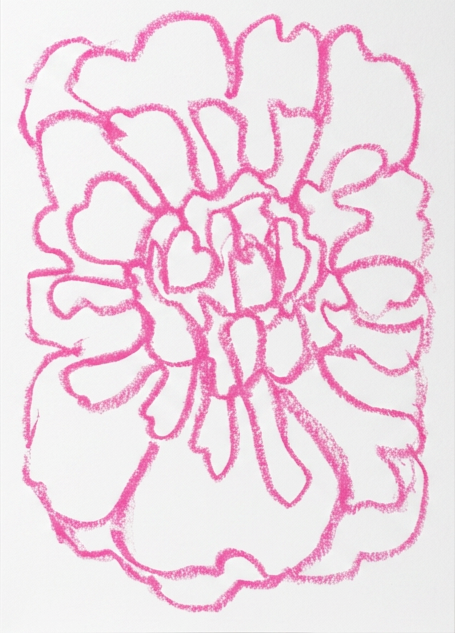
Art I’m Making
What really helps me work through my “flight” tendencies is single line sketches. These are messy, tiny expressions that let me begin without perfection, done right before I start a confronting task.
They’re quick enough to do when I’m frozen (each one takes <30 seconds). Joyful enough to break me out of overthinking. Think play first, work next.
And honestly? They remind me that creative action can happen even when I’m scared.