Everybody wants transformation, but nobody wants to change.
I didn't fully understand that until one of the best days of my life: my partner proposed and I got a raise on the same day. I was ecstatic! And then I woke up the next morning feeling anxious. First came the decision anxiety (is this the ring I'll wear for the rest of my life?), then the quieter fear underneath: will my partner still love me if I out-earn him?
Good change. Real change. And still, my nervous system sounded the alarm.
Research shows that a stressed nervous system isn't well-positioned for behaviour change; it's in survival mode, not growth mode.[1] When we're already at capacity, even positive change can feel like the final straw.
If you work in green buildings and regenerative design, change is your profession. And yet, (as you've probably experienced), when you push the system, the system pushes back - starting with the people in it, yourself included.
INNER SUSTAINABILITY INSIGHT
Mastering your own reaction to change
Notice which of these feels familiar:
🟥 Fight: You dive in and push hard. Enthusiasm that tips into force.
🟨 Flight: You find reasons to delay. More research to do, more boxes to check.
🟦 Freeze: You generate reasons why it won't work. Risk aversion that keeps you stuck.
🟩 Fawn: You say yes when you mean no, and end up over-committed and resentful.
None of these is wrong; they're all protective responses. The work is simply becoming aware of your default so it stops running the show.
OUTER SUSTAINABILITY INSIGHT
Understanding resistance before pushing through it
The people you work with have understandable reasons for resisting change. A client spending millions on a building wants that investment to be wise. A contractor working under tight schedules with dangerous construction equipment is managing real risk. A consultant hesitating to specify untested materials is thinking about liability.
When people feel heard, they're far more likely to hear your perspective in return. This is cognitive empathy: not agreeing with someone's position, but genuinely understanding it.
One simple way to get there is to ask why three times. You don't need to schedule a dedicated meeting; just stay curious a little longer in everyday conversations. Getting to the root of someone's hesitation gives you far more to work with than assuming developers only care about money.
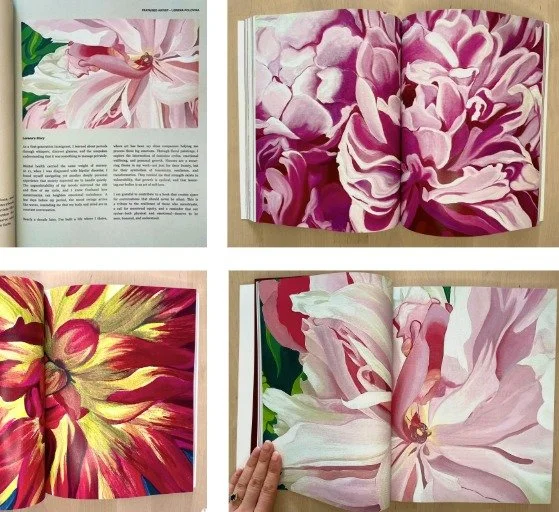
ART I’M MAKING
I’m excited to share that my artwork has been featured in a book! It’s called Bleed: Period Stories Written to Be Shared and is compiled by Joni, a sustainable period care company. The book centres experiences we don't often talk about, which feels very aligned with what my newsletter is about.
My period story explores navigating cultural taboos as a first generation immigrant and how my period used to affect my mental health. It also touches on how art helps me process big emotions. My floral paintings symbolize femininity, resilience, and strength; they're a reminder that life can be about thriving, not just surviving.
You can learn more about the book here and if you’re interested, you can purchase it at this link.
REFLECTION QUESTIONS
What is your default reaction to change, and where have you noticed it showing up at work recently?
Source:
Woo et al. (2021) — Chronic Stress Weakens Connectivity in the Prefrontal Cortex, published in Chronic Stress (SAGE journals)