No. 8 What Forests, Fungi and Shadows Have to Teach Us
Summer in the Northern Hemisphere is well underway. I spent the weekend surfing in Tofino, soaking in coastal forests and salty air, doing my best to catch some waves. And somewhere between wipeouts, it hit me: I haven't talked about how profoundly nature regulates our nervous system.
We'll go deeper on this topic in future editions, but for now, let's keep it simple.
INNER SUSTAINABILITY INSIGHT
Forest bathing and your nervous system
There's a reason a walk in the woods feels like a reset. Forest bathing, the practice of simply being present in a forest environment, has been shown to reduce stress and improve immune function. The mechanism behind this is phytoncides: naturally occurring compounds released by trees that, when inhaled, shift our bodies toward parasympathetic dominance, which is the the rest-and-restore state our nervous systems are craving.
A 2026 review published in Medical Sciences found that forest bathing is associated with enhanced natural killer cell activity, reduced cortisol levels, and measurable immune regulation, with phytoncides identified as a key contributor to these effects.[1] The research is compelling enough that doctors in Japan now formally prescribe forest therapy to patients.
You don't need to be in Tofino. A park, a trail, even a tree-lined street counts. The invitation this week is simply to get outside with intention.
OUTER SUSTAINABILITY INSIGHT
Bringing bio-based materials from the bench to the real world
My passion for architecture was rekindled when I watched Neri Oxman's documentary on Bio-Architecture. I spent three years researching mycelium biocomposites at the Biogenic Architecture Lab, and bio-based materials have had my heart ever since.
Mycelium, the root structure of mushrooms, can be grown on upcycled agricultural waste like sawdust and straw to create building materials that are regenerative by design. The science is extraordinary. The harder question is: how do we move these paradigm-shifting materials from bench scale to the real world?
One group doing exactly that is the Biobased Materials Collective, whose mission is to scale regional plant-based materials across North America. They recently released the Bio- & Mineral-Based Materials Primer, a resource designed to help architects make smarter material choices by connecting material performance to culture and ecology. Worth a read.
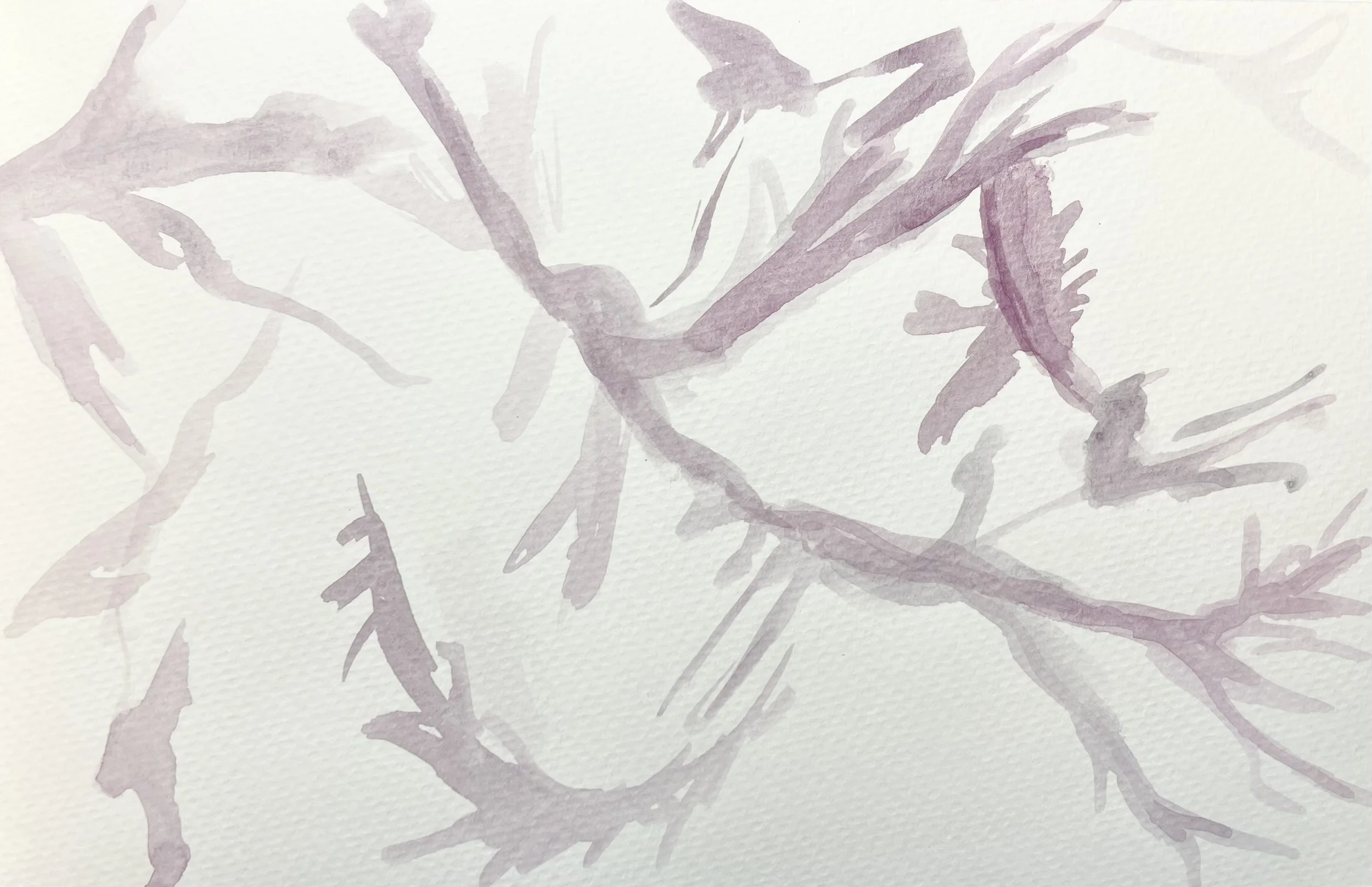
ART I’M MAKING
The Cambridge Dictionary defines a paradigm shift as a situation in which the usual and accepted way of doing something changes completely. Art, for me, is one of the fastest ways to experience one firsthand.
This week I was sitting at the Zen Garden, sketchbook open, ready to paint what was in front of me. The sun and wind sent shadows dancing across my page. I felt irritated, and my first instinct was to find a way to block them. But then I thought: what if I sketch the shadows instead?
So I did. Rather than fighting what was there, I became absorbed in trying to capture something fleeting and alive. A small shift in perspective; a completely different painting.
REFLECTION QUESTIONS
Where in your work are you fighting the conditions instead of working with them?
Source:
Bandyopadhyay, A., Shah, S., & Roviello, G. N. (2026). Forest bathing (Shinrin-yoku) and preventive medicine: Immune modulation, stress regulation, neurocognitive resilience, and neurological health. Medical Sciences, 14(1), 95. https://pmc.ncbi.nlm.nih.gov/articles/PMC12921901/