"Change starts when someone sees the next step." I came across this line from William Drayton while listening to The Magic of Imperfection, the new book by Jason McLennan (founder of the Living Building Challenge), and it stopped me in my tracks.
INNER SUSTAINABILITY INSIGHT
When I talk to people about regenerative design, so many find it unattainable, unrealistic, too difficult. The thought creeps in: we haven't even figured out sustainable yet, and now you want us to be regenerative too? The gap between the vision and the reality feels enormous, and that gap can be demotivating.
So how do we bridge it? Through small steps.
I know that doesn't sound sexy. Is a small step really going to make a difference? Yes. We have to start somewhere, because change begins when we see the next step, not all of them. We don't need all the steps mapped out; that's overwhelming. And we don't need to wait until we have it all figured out either. That's just perfectionism wearing a disguise.
Notice the stories that come up when you try to take that first step somewhere new or unfamiliar. For a lot of people, one of the first things to surface is impostor syndrome, that sense of not being enough to start. This shows up a lot in the green building industry, which is so knowledge-based, it's easy to feel like you'll never know enough. So we wait. We wait for the license, the fancy project list, the gray hairs, the sense that we've "figured it all out."
Okay, maybe not the gray hairs.
That waiting is really just overthinking dressed up as diligence.
Starting small is the antidote. It's gentle enough for your nervous system to actually tolerate, and it lets others give you feedback along the way instead of only at the end.
OUTER SUSTAINABILITY INSIGHT
That last part, supporting your nervous system while still moving forward, is exactly what I tried to build into a tool: the Sustainable Agency Workbook.
Agency is about feeling like you have a say in what you're doing. This workbook is meant to help you share your ideas by:
Structuring your thoughts
Identifying benefits beyond the sustainability angle, so you can build stakeholder buy-in (think cost, schedule, business development opportunities, etc.)
Identifying people to partner with for feedback before you bring an idea forward
A nervous system check-in, so you can move forward one small step at a time
ART I’M MAKING
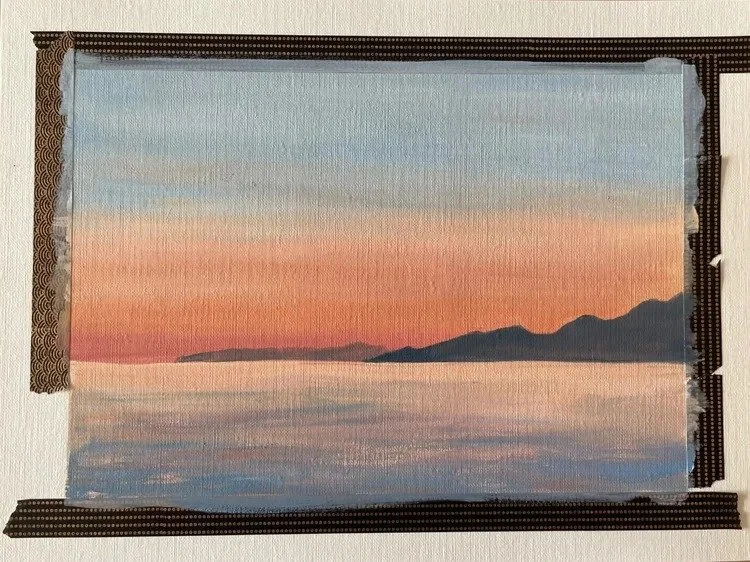
I’m lucky to live in a gorgeous neighborhood by the beach, where I get to see some gorgeous sunsets. I'd been itching to paint one en plein air, Monet-style, but every evening I tell myself I’m too busy.
So this week, I took my own advice. My only to-do this week was: gather my plein air supplies into a bag. That was it.
I ended up painting five pieces, one every single night. Working outdoors, with the light shifting and under an hour before the sun disappeared, meant painting under pressure and sitting with the fear of being seen. The piece above is where it really showed: my tape ran out and going back for more meant missing the sunset. I made do with what I had to keep going.
Turns out the lesson from Inner Sustainability applies to a canvas just as much as a career: you don't need the whole plan. You just need the bag packed.